Do Bread Boxes Keep Bread Fresh? Choosing by Climate, Loaf Type, and Counter Space
The tightest container is not always the best place for bread. A seal that protects a soft crumb can trap condensation, soften a crisp crust, and encourage mold, so the useful question is not simply which bread box to buy, but whether your climate, usual loaf, eating pace, and counter space justify one at all.
Do bread boxes actually keep bread fresh?
Bread boxes can preserve pleasant room-temperature texture by limiting moisture loss without completely trapping humidity. They cannot stop staling, prevent every mold outbreak, or make spoiled bread safe.
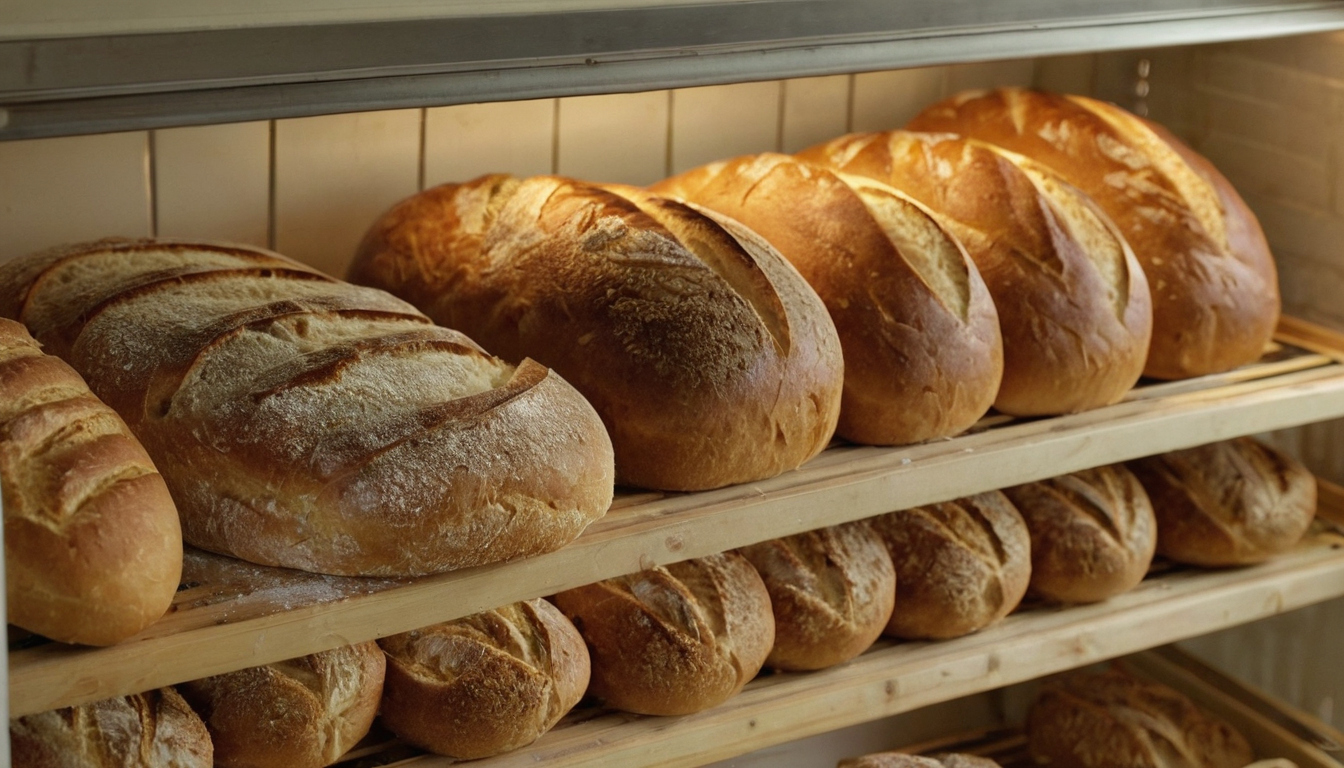
Do bread boxes actually keep bread fresh shown with practical context cues.
Bread staling is not the same process as bread drying out
Bread staling includes starch retrogradation and moisture redistribution, which firm the crumb even when a loaf has not simply dried out. Research on white wheat bread tested formulations containing 0%, 10%, 15%, and 20% resistant starch. The tested breads with resistant starch retained more crumb moisture and showed less firmness and slower retrogradation than the control. The 15% formulation had volume, moisture, and firmness similar to the control, illustrating how formulation can affect texture during storage.
| Storage method | Likely texture and moisture tradeoff |
|---|---|
| Exposed | A crust may remain crisp briefly, but the crumb dries quickly. |
| Paper | Airflow helps protect crust character but offers limited protection from drying. |
| Plastic or airtight | Softness is retained, while crisp crusts soften and condensation may collect. |
| Ventilated bread box | The enclosure moderates drying without fully trapping humidity. |
| Refrigerated | Cold may delay mold, but the crumb can firm faster. |
| Frozen | Freezing suits longer holding but requires protective wrapping and thawing. |
A bread box balances airflow and humidity rather than sealing bread completely
The USDA Agricultural Research Service distinguishes total moisture from water activity, meaning water available for microbial growth and chemical processes. Water activity also helps predict the growth of bacteria, yeasts, and molds under known conditions. In a sealed space at a constant temperature, bread and headspace move toward moisture equilibrium. In drier surrounding air, bread releases moisture and dries.
A German household-storage study compared a bread box, plastic bag, refrigeration, and microperforated paper. Under that experiment’s limited conditions, visual inspection provided an adequate microbial-safety check, and visible spoilage was expected to deter consumption before the tested mycotoxins reached harmful amounts. Those findings do not make appearance a universal safety guarantee. They show why texture, visible spoilage, and microbial shelf life require separate judgments.
A bread box is most useful when climate, loaf turnover, and packaging align
A bread box works best when a household keeps bread at room temperature, eats it within several days, and needs moderate protection from drying and countertop clutter. Hot, humid kitchens and slow consumption usually favor freezing.
| Indoor kitchen condition | Daily use | Several servings weekly | Occasional use |
|---|---|---|---|
| Cool and dry | Use a ventilated bread box to limit rapid drying. | Keep part in the box and freeze the balance. | Skip the box and freeze portions. |
| Temperate | A bread box suits many packaged or lightly wrapped loaves. | Monitor for condensation and freeze excess slices. | Freeze unless immediate counter access is essential. |
| Hot and humid | Use original packaging briefly or freeze portions. | Freezing is more dependable than prolonged counter storage. | Skip the bread box. |
| Heavily air-conditioned | A bread box can reduce drying caused by conditioned air. | Combine light wrapping with freezing. | Freeze portions rather than occupying counter space. |
Indoor kitchen conditions matter more than the outdoor weather report. Check whether the counter receives direct sun, sits beside a kettle, warms near an oven, or dries food quickly under air conditioning. Bread formulation matters too. The USDA lists typical bread water activity as 0.95, but that value does not describe every recipe. In a sealed container at constant temperature, water activity multiplied by 100 corresponds to the equilibrium relative humidity produced after the food and headspace have equilibrated.
When does an airtight storage container for food create too much moisture for bread?
An airtight storage container for food becomes risky when it traps steam from warm bread or when a temperature change causes humid air to condense. The U.S. Environmental Protection Agency recommends correcting condensation and damp spots promptly as a general mold-control principle.
- Do not enclose warm homemade bread. Cool it completely so steam does not collect on the lid, liner, or crust.
- Watch soft commercial loaves. Original plastic packaging often provides adequate moisture retention. Placing the closed bag inside a bread box may be enough.
- Avoid sealing crusty bread for texture alone. Trapped moisture moves toward the crust and softens it, even when the crumb remains pleasant.
- Inspect sliced and moisture-rich loaves closely. Exposed surfaces and trapped humidity can make condensation or visible mold easier to miss.
Water activity predicts microbial opportunity rather than visible wetness alone. USDA guidance notes that most molds stop growing below about 0.8 water activity, although some can grow slowly around that level. UC food-preservation guidance gives broader organism thresholds and notes that some molds can survive at lower values under suitable conditions. A countertop container cannot measure or guarantee those conditions.
When should a household freeze bread instead of buying a bread box?
Freeze bread when the household eats it occasionally, cannot finish a loaf before its quality declines, has a persistently warm or humid kitchen, or lacks clear counter space.
- Slice sandwich and homemade loaves before freezing so only the needed servings leave the freezer.
- Wrap whole loaves, rolls, and artisan portions closely, then place them in freezer-safe packaging with excess air pressed out.
- Thaw only the required quantity and keep the remaining package closed to limit frost and repeated temperature changes.
Freezing immobilizes water and slows microbial metabolism and quality-changing reactions. If room-temperature storage still fits the household routine, match the routine to the specific loaf rather than treating every bread as interchangeable.
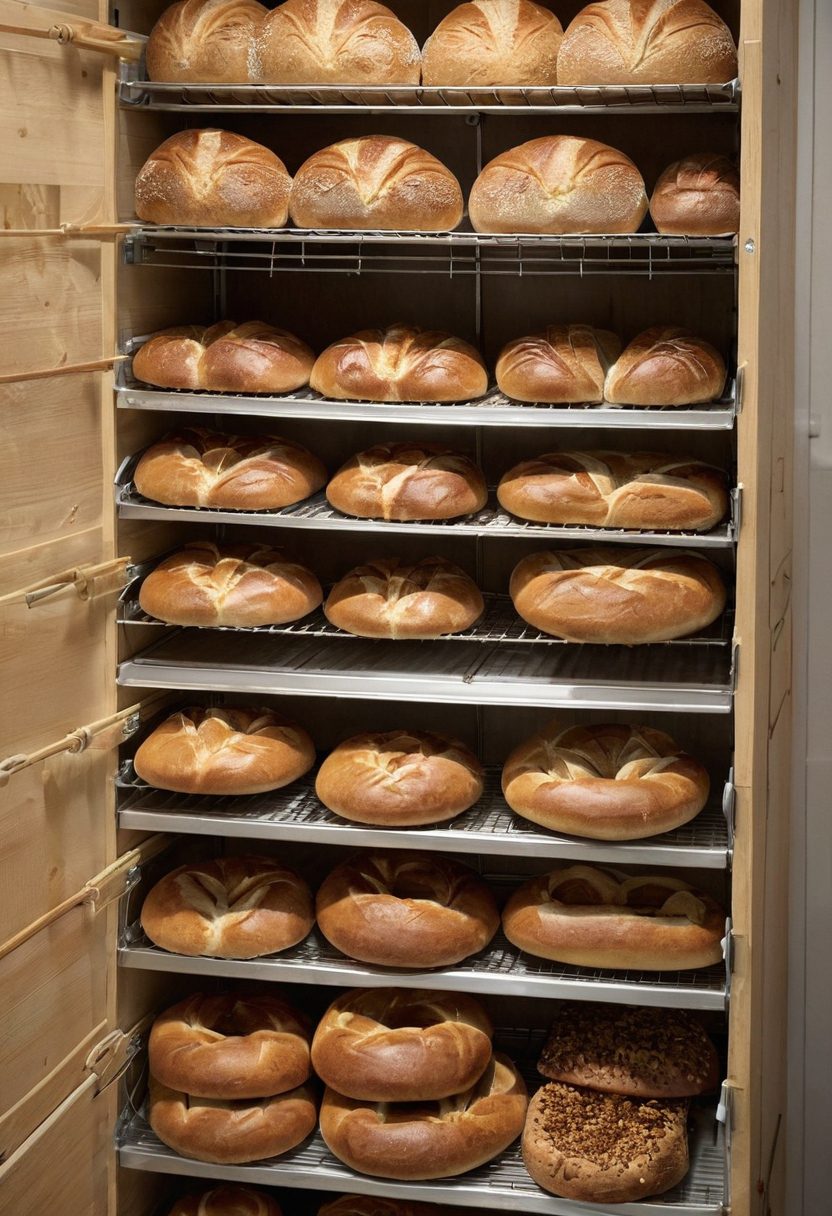
A bread box is most useful when climate, loaf turnover, and packaging align shown with practical context cues.
Different loaf types need different bread-box routines
Soft packaged bread, homemade loaves, crusty boules, rolls, flatbreads, and enriched breads need distinct routines based on crust, moisture, slicing, formulation, and how quickly the household will eat them.
Homemade and preservative-free bread requires shorter planning horizons
Allow every homemade loaf to cool completely before bagging it or placing it in a bread box. Trapped warmth creates condensation, leaving the crust damp and adding moisture to the enclosure.
- Commercial sandwich bread: Keep the loaf in its original packaging, close the bag after each use, and place the packaged loaf in the bread box if counter order or protection from light matters. Retain the label for date and storage instructions.
- Homemade sandwich bread: Use a closed bag or washable wrap inside the box when a soft crumb is the priority. Freeze portions early if the loaf will turn over slowly.
- Rolls and flatbreads: Group them in a bag or lidded food-safe container within the box so their exposed edges do not dry rapidly. Freeze extras rather than repeatedly opening a large batch.
- Enriched bread: Wrap plain brioche and similar breads to protect their tender crumb. The resistant-starch study cited above linked lower firmness in tested breads containing up to 15% resistant starch with slower retrogradation, greater moisture, and water retention. That limited result illustrates formulation differences, not a universal storage promise.
Bread containing custard, meat, soft cheese, or another perishable filling does not belong in a room-temperature bread-box routine. Follow the recipe or package refrigeration directions. Firming and drying are generally quality problems, while visible mold is a disposal signal rather than ordinary staling.
Crusty bread needs a different wrapping strategy from soft sandwich bread
- Artisan boule or sourdough for short storage: Place the fully cooled loaf cut-side down on a clean board or protect only the cut face. A ventilated box then limits exposure without wrapping the entire crust in plastic.
- Artisan boule for longer storage: Freeze a portion early. Plastic retains crumb moisture but softens a crisp crust; paper or cloth preserves more crust character but permits faster moisture loss.
- Any sliced loaf: Cover the exposed face and minimize loose slices. More cut surface means faster texture decline and more opportunities for contamination during family handling.
Once the loaf routine is clear, choose a material and construction style that support it without creating a cleaning problem.
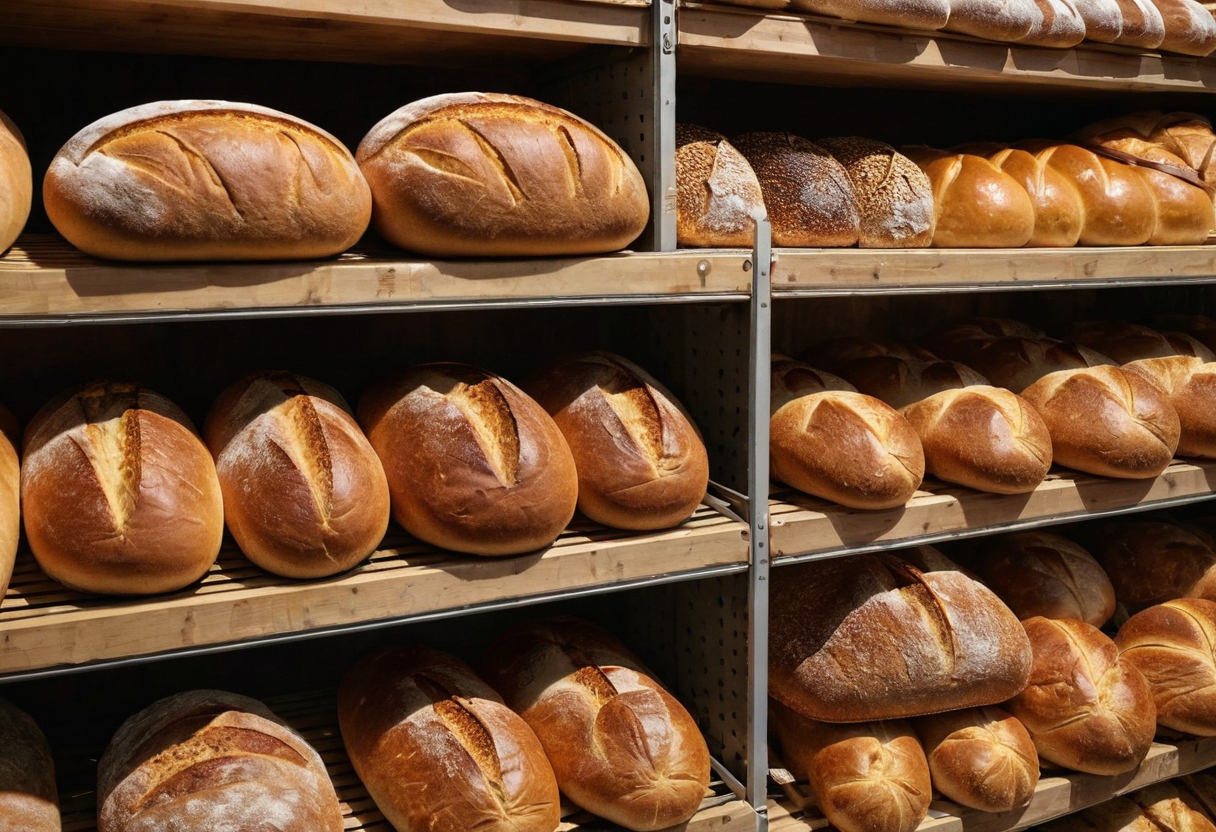
Different loaf types need different bread-box routines shown as an editorial planning reference.
Wood, metal, ceramic, and plastic bread boxes solve different household problems
No bread-box material is automatically best at preserving bread. With comparable usable volume and ventilation, enclosure design, seams, coatings, and cleaning habits matter more than the outer shell. Wood adds warmth but may absorb moisture, metal is durable but can dent or condense, ceramic is washable but heavy, and plastic is light but varies in durability.
Which bread-box material is easiest to clean after crumbs, moisture, or mold?
Smooth, nonporous interiors are generally easiest to wipe, inspect, and dry. Manufacturer care instructions still determine whether removable parts are dishwasher-safe and whether coatings tolerate detergent or prolonged contact with water.
| Material | Household advantage | Upkeep and durability diagnostic |
|---|---|---|
| Wood | Warm appearance and a softer visual presence on an open counter | Unfinished surfaces can absorb moisture and odors. Avoid soaking, remove crumbs promptly, and dry completely. Deep staining, splitting, or a persistent musty odor may make replacement more practical than aggressive scrubbing. |
| Metal | Good everyday durability with relatively thin walls | Stainless steel and sound coated surfaces wipe clean easily. Check seams for crumbs, coatings for chips, and exposed steel for rust. Metal near heat or cold drafts may collect condensation. |
| Ceramic | A nonporous glazed interior and substantial countertop presence | Glazed surfaces are easy to inspect while the glaze remains intact. Ceramic is heavy and can chip or crack. Confirm that glazes and decorative finishes are intended for food-storage use. |
| Plastic | Low weight and easy relocation on a busy family counter | One-piece interiors and removable trays simplify cleaning. Scratches, warped lids, odor retention, and brittle hinges reduce useful life. Confirm food-contact documentation and follow stated dishwasher restrictions. |
Bread-box construction matters more than a wood, metal, ceramic, or plastic label
A practical bread box has vents that remain open, an interior that can be fully seen and reached, and seams that do not collect flour and crumbs. A removable crumb tray helps only if it slides out without tipping debris back into the box.
Test hinges, roll-top tracks, and closures for smooth movement. A loosely fitted lid may provide useful airflow, but it does not guarantee pest exclusion. Inspect interior paints, powder coatings, glazes, adhesives, liners, and unfinished surfaces before purchase. Peeling, cracking, rust, or persistent odors are warning signs.
After the material and construction pass inspection, measure the loaf, lid movement, and counter. An attractive box that blocks a vent, outlet, or cabinet door will not improve the kitchen routine.
Measure the loaf, lid movement, and counter before choosing a bread box
A bread box earns its counter space only when the usable interior fits the household’s normal bread without crowding and the door opens beneath the cabinets. Exterior product dimensions do not reveal how much bread the interior actually holds.
How much usable capacity does one loaf or an artisan boule require?
Measure the bread actually purchased rather than relying on labels such as “large” or “two-loaf.” A packaged sandwich loaf creates a long rectangular envelope, while an artisan boule may be shorter but wider and taller. Rolls need enough floor area to sit loosely instead of being stacked against the vents.
- Place the unopened packaged loaf, cooled homemade loaf, or usual assortment on the counter.
- Measure the widest, tallest, and deepest points, including packaging closures and folded bag ends.
- Add modest clearance so the lid does not scrape the crust, crush soft slices, or press packaging against ventilation openings.
- Compare that envelope with the box’s internal usable dimensions, not only its exterior measurements.
Curved roll-top roofs, tapered ceramic walls, projecting hinges, internal handles, and raised ventilation structures can reduce usable capacity. For two loaves or mixed bread and rolls, arrange representative packages together and measure the combined envelope. Avoid planning on diagonal placement unless bread can still be removed without emptying the box.
Which bread-box door works best beneath kitchen cabinets?
A hinged top needs vertical clearance and can become awkward under low cabinets. Test the open lid path with a cardboard template, including the handle. A roll-top usually keeps movement within the box’s profile, although its curved housing can reduce interior height. A drop-front needs clear counter space in front and should not collide with outlet plugs, canisters, or the backsplash.
Door operation should also suit the household. Check whether the box opens steadily with one hand, works from the most common approach, and is manageable for children who retrieve bread. Heavy ceramic lids require secure handling, while exposed hinges and sliding doors can create pinch points. A drop-front promoted as a cutting surface must remain stable, level, and supported before bearing pressure. Stackable designs should not shift when the lower door opens.
Keep the final location away from direct sun, cooktops, ovens, dishwasher steam, and other heat or moisture sources. Once the fit and opening path work, the final test is whether the box can be emptied, inspected, and cleaned without becoming another neglected countertop container.
A bread box should be easy to empty, inspect, and clean
Bread-box performance depends on upkeep as much as design. Remove crumbs, inspect concealed seams, keep the interior dry, and never place fresh bread beside spoiled remnants. If mold appears, discard the affected bread and clean the box using a method appropriate for its material.
Visible mold on bread requires action beyond removing one slice
Discard the entire loaf or package when bread shows mold. Bread is soft and porous, so threadlike growth may extend beyond the visible spot. Cutting away one patch or removing one slice does not provide a dependable safety margin. Do not smell moldy bread closely because disturbing it can release spores.
Check rolls, tortillas, and other baked goods stored beside the spoiled loaf. Empty the box, dispose of liners that cannot be washed, and remove crumbs from corners, hinges, roll-top tracks, seals, and ventilation holes. Cleaning reduces residue and spores, but ordinary household cleaning should not be described as sterilization.
A simple weekly bread-box routine protects freshness and counter order
- Empty and inspect: Frequent bread users should check the box and rotate older loaves at least weekly. Occasional users should inspect it whenever bread enters or leaves.
- Remove crumbs: Shake out a removable tray or use a clean brush. Crumb buildup supplies food for ants and pantry pests, while a bread box alone cannot guarantee pest exclusion.
- Clean by material: Wipe finished wood lightly rather than soaking it. Wash removable plastic, glazed ceramic, and coated-metal parts according to the maker’s instructions. Avoid abrasive tools that can scratch plastic, glaze, or protective coatings.
- Dry completely: Leave every surface, track, liner, and corner dry before replacing bread. Clear blocked vents and investigate recurring condensation rather than repeatedly wiping it away.
Moisture behavior remains central to food preservation, as summarized in the UC Master Food Preserver guidance published on April 7, 2025. Replace a box with cracked glaze, peeling food-contact coating, deep rust, persistent odor, or a damaged porous surface that cannot be cleaned confidently.
Buy a bread box when bread turns over quickly, the kitchen is not persistently humid, sufficient counter space is available, and routine cleaning feels realistic. Skip one when freezing suits slow turnover better or the box would become another crowded storage container. The right decision is the one that fits the household’s climate, loaf, and turnover, not the container with the tightest seal.
Frequently asked questions about bread boxes
What type of bread box keeps bread freshest in a humid kitchen?
A ventilated, easy-to-clean bread box is preferable to a fully airtight model in a humid kitchen, but it cannot correct a persistently damp location. Keep the box away from steam and heat, inspect for condensation, and freeze portions that will not be eaten promptly.
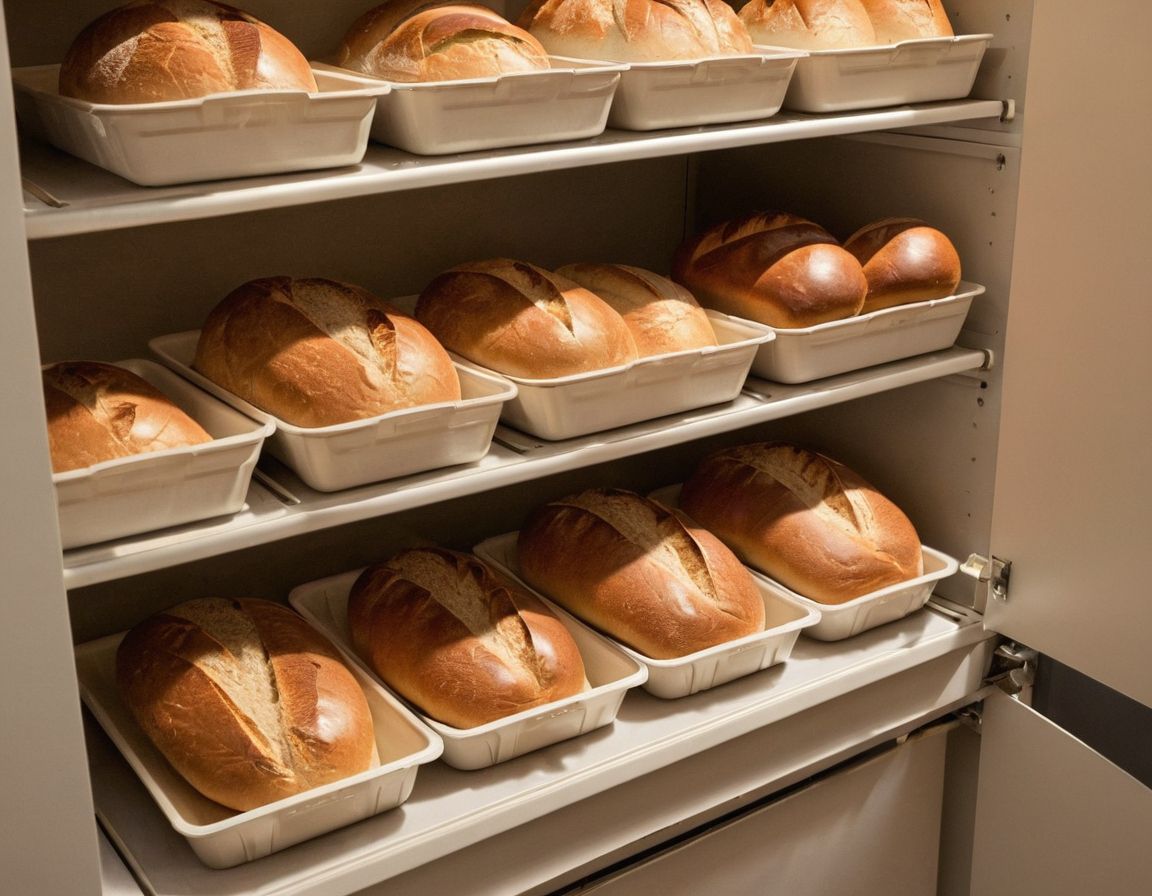
Frequently asked questions about bread boxes shown as an editorial planning reference.
How long can bread stay fresh in a bread box before it should be frozen or discarded?
No single duration applies to every loaf. Formulation, preservatives, slicing, indoor conditions, and handling all affect quality and mold risk. Freeze surplus while it still tastes good, and discard the entire loaf if visible mold, an unusual odor, or other clear spoilage appears.
Why do some households use bread boxes while others keep bread in its original packaging?
Original packaging already protects many commercial sandwich loaves from moisture loss. A bread box adds counter organization, light protection, and moderate airflow, but households with slow turnover may gain more from freezing than from another countertop container.
Is a bread box better than an airtight storage container for homemade bread?
A bread box can be better for fully cooled crusty bread because some airflow helps preserve crust texture. A bag or airtight food-storage container may better protect a soft homemade sandwich crumb, provided the loaf is completely cool and condensation does not develop.
Can a bread box prevent mold, or does it only change how quickly bread stales?
A bread box can influence moisture loss, crust texture, and the conditions surrounding a loaf, but it cannot guarantee mold prevention or stop starch retrogradation. Clean storage, complete cooling, suitable packaging, close inspection, and timely freezing remain necessary.