A Family Closet Organization Plan Built Around Mornings, Laundry, and Shared Space
Rushed mornings reveal every closet problem: unreachable uniforms, clean laundry trapped in baskets, and shoes across the floor. A better family closet starts with movement, not containers.
A family closet organization plan should start with traffic, laundry return, and morning exits
A family closet organization plan should begin with weekday traffic and laundry return. Whether the space is a shared bedroom closet, hall closet, walk-in, reach-in, or laundry-adjacent closet, the layout should reduce collisions and keep clean clothes moving.
Map who uses the closet before leaving the house
- List who enters: adults, toddlers, school-age children, teens, and anyone dressing at the same time.
- Record what they grab: uniforms, work clothes, shoes, bags, outerwear, pajamas, or accessories.
- Mark where laundry stalls: dryer, bed, sofa, basket, top shelf, drawer front, or floor.
This routine-first approach fits family-centered home planning because the closet must serve the morning, not only look calm after sorting.
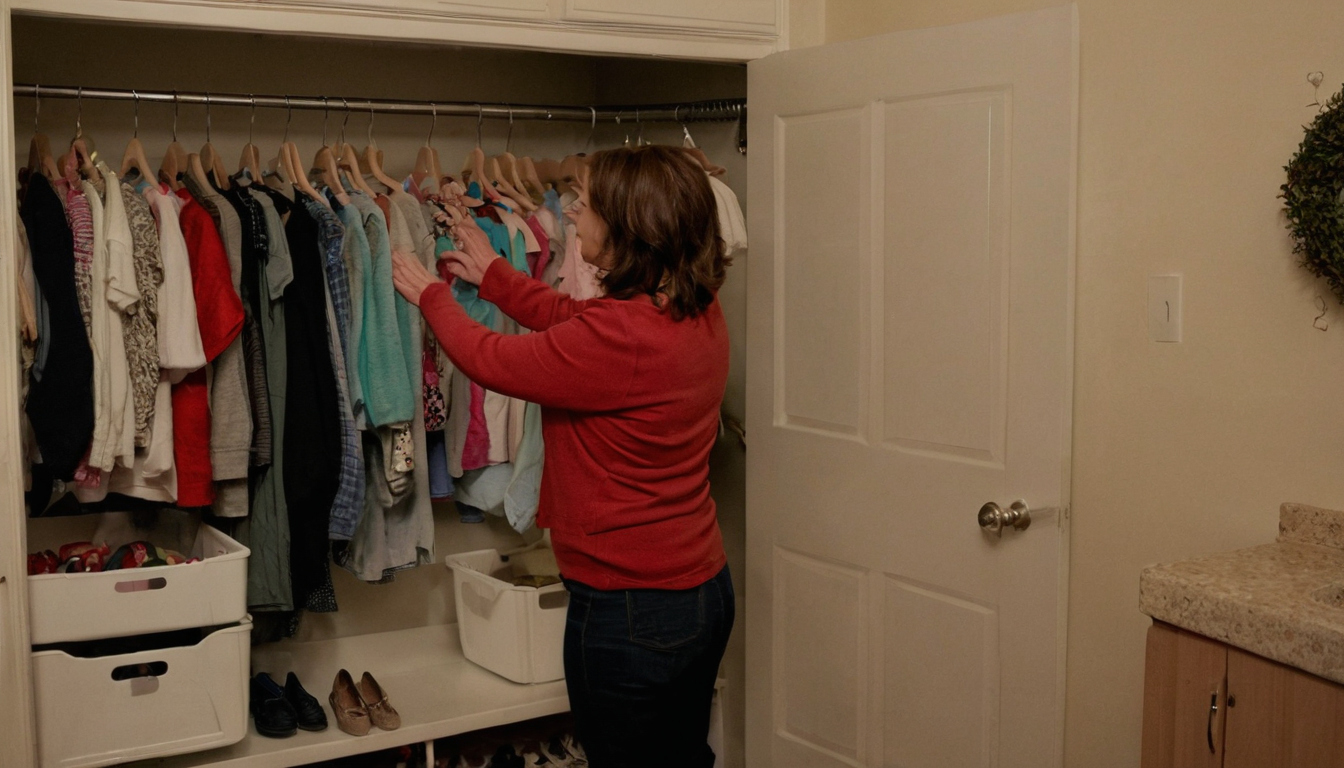
A family closet organization plan should start with traffic, laundry return, and morning exits shown as an editorial planning reference.
Find the laundry bottleneck
- No landing space for folded stacks.
- One crowded rod that blocks quick hanging.
- Drawers so full that clean clothes return to baskets.
Which zones does a shared family closet need before buying a closet system?
A shared family closet needs zones for daily clothes, laundry return, shoes, accessories, seasonal overflow, and adult-only storage before any closet system is chosen.
- Daily clothes: uniforms, work outfits, pajamas, jackets, and underlayers.
- Laundry return: an open shelf, basket slot, or staging bin.
- Shoes: daily pairs near the floor, backup pairs higher or farther back.
- Accessories: belts, hair items, hats, gloves, bags, and school extras.
- Seasonal overflow: coats, swimwear, holiday outfits, and weather gear.
- Adult-only storage: medication, valuables, delicate garments, and unsafe items.
Put daily-use zones within easy reach
Daily closet organization works best when the most-used items sit between shoulder and knee height for the main user. A PubMed Central article on the “individual convenient zone” explains that comfortable manipulation depends on upper-limb range, strength, and object position PubMed Central. In practice, school clothes should be reachable without climbing, while adult workwear or shared supplies can sit higher.
Give laundry return open space
Clean laundry stalls when every drawer needs sorting and every hanger requires a decision. Add one open landing zone: a shallow shelf, labeled basket, or temporary bin that does not block the door. This supports a place for every item without expecting perfect weekday put-away.
Make seasonal storage less convenient
Seasonal clothing, spare bedding, sentimental outfits, and emergency gear should not occupy prime space. Use upper shelves, lidded bins, or a secondary closet after checking width, depth, height, and door swing.
Closet shelving and rod heights should match adult reach, child independence, and folded-clothing depth
Closet shelving works when shelf height, depth, rod placement, and drawer spacing fit both the clothing and the people using it. Adjustable shelving usually lasts longer because children grow, seasons change, and folded stacks vary.
Adjust rod heights for double-hang, long-hang, and children’s clothes
A reach-in closet is often about 24 inches deep, so rod height matters as much as rod length. A single rod commonly sits around 66 to 72 inches high. Double-hang layouts often place the lower rod around 40 to 42 inches and the upper rod around 80 to 84 inches.
Long-hang sections need clear drop space for coats, dresses, robes, and costumes. A child-height rod can help young children dress independently, but treat it as adjustable or temporary.
Keep folded stacks short
Shelf spacing should let someone remove one item without rebuilding the pile. Adult T-shirts, jeans, and sweaters behave better in short stacks. Children’s clothes need even less vertical space because small pieces slide and mix quickly. Use shallower shelves for folded clothes, deeper shelves for bins, and leave hand space above baskets.
Choose drawer organizers by item type
A drawer organizer earns its space when it separates socks, underwear, hair ties, belts, gloves, school badges, and sports accessories. Open bins work better for bulky sweatshirts and pajamas.
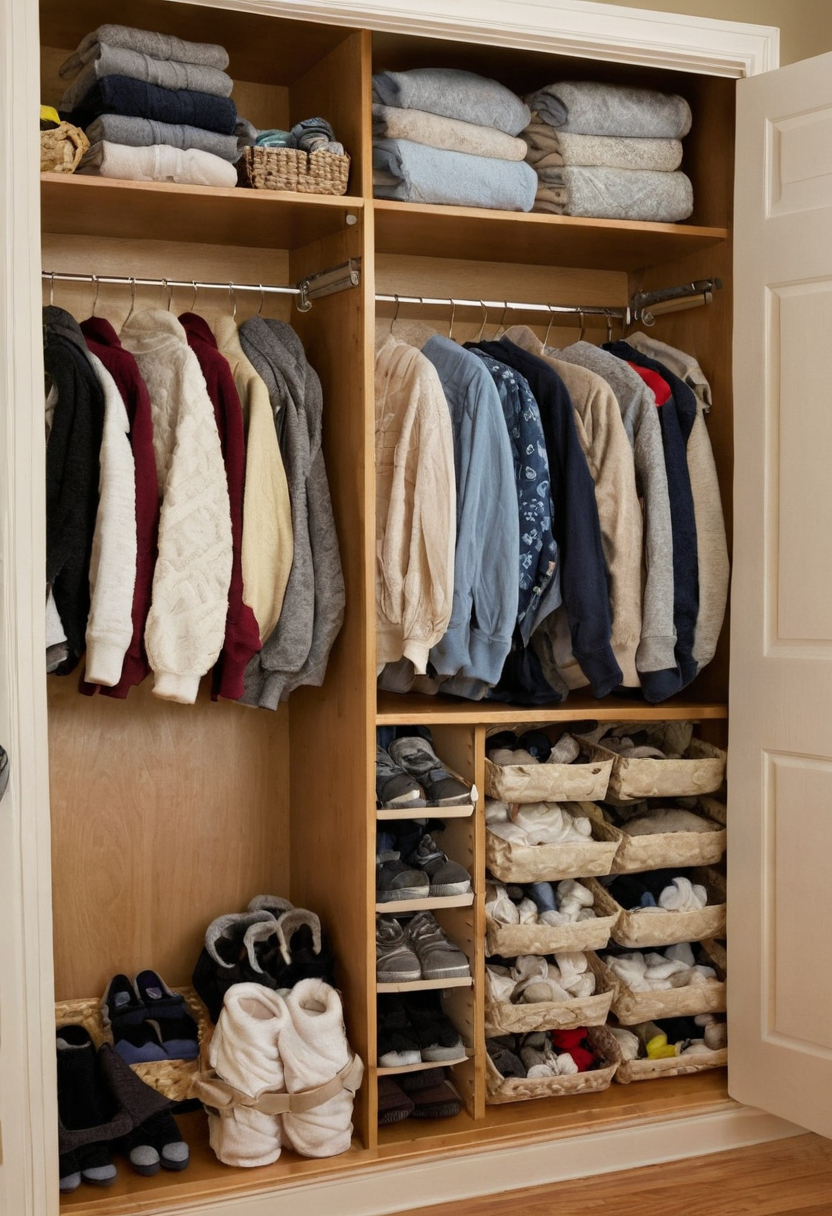
Closet shelving and rod heights should match adult reach, child independence, and folded-clothing depth shown as an editorial planning reference.
A shoe organizer for closet use works only when it matches entry habits, school gear, and cleaning routines
A shoe organizer should be selected after deciding which shoes belong in the family closet and which belong near the entry. Shoe storage must handle dirt, fast exits, and mismatched pairs.
Use floor racks for daily clean shoes
A floor shoe rack works best for pairs used several times a week: sneakers, school shoes, dress shoes, slippers, sandals, and one weather pair per person. A practical limit is two to four daily pairs per person inside the closet. Muddy boots, cleats, and wet snow shoes usually belong near the entry, mudroom, or laundry area.
Moisture matters more than symmetry. The U.S. Environmental Protection Agency says wet or damp spots should be fixed promptly to help prevent mold growth, which makes airflow useful for damp athletic shoes in enclosed closets EPA mold and moisture guidance.
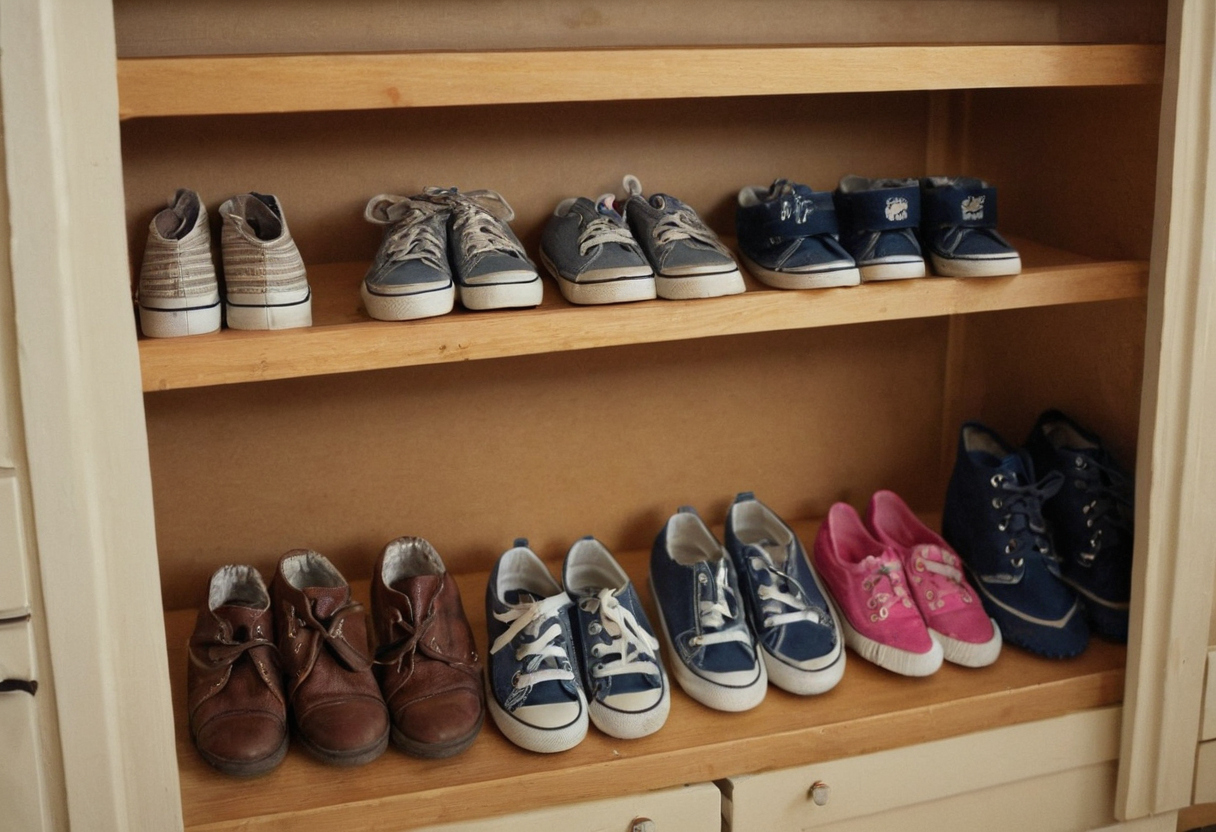
A shoe organizer for closet use works only when it matches entry habits, school gear, and cleaning routines shown as an editorial planning reference.
Use over-door organizers only when clearance and weight allow
An over-door shoe organizer can hold light pairs, sunscreen, hair ties, gloves, or children’s sandals, but it fails if the door rubs, blocks hooks, or swings into shelving. Test the door gap before buying. If a new organizer smells strongly of finishes, adhesives, or packaging, ventilate the room; the EPA lists furnishings, building materials, cleaning products, paints, varnishes, and waxes as common indoor VOC sources EPA indoor air guidance.
Is it cheaper to buy a closet organizer or build a family closet system?
Buying a closet organizer is often cheaper for renters, short-term fixes, and small reach-in closets. A built or installed closet system can be better for long-term family use when measurements, anchors, load needs, and adjustability are planned first.
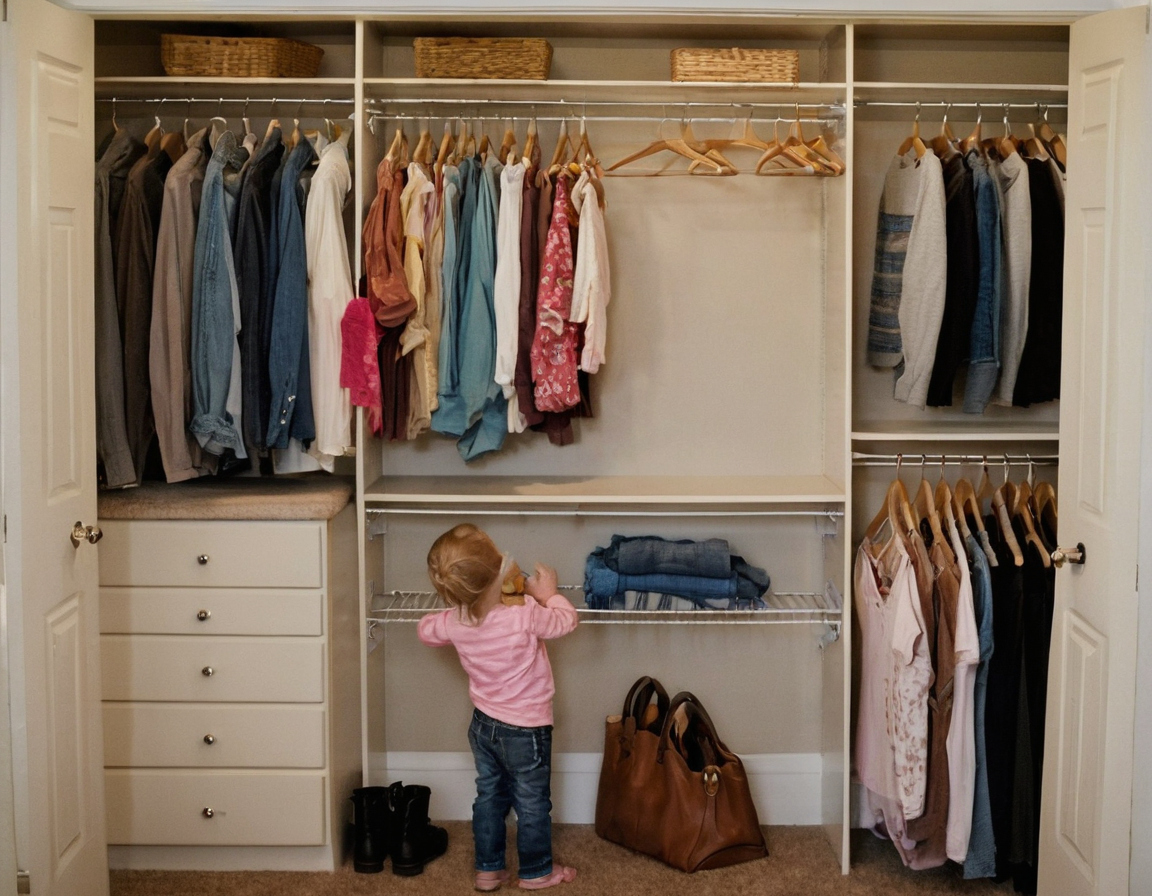
Is it cheaper to buy a closet organizer or build a family closet system shown as an editorial planning reference.
Freestanding organizers suit renters
Freestanding racks, cubes, and fabric drawer towers cost less than built-ins. They work best when the unit stands level and children will not climb or pull on it. Tall units still need anti-tip hardware where allowed.
Compare wire, laminate, and wood systems
Adjustable wire shelving costs less and ventilates well, but weak anchoring can sag. Laminate and melamine systems look cleaner and add drawers, yet cut edges dislike moisture and heavy spans can bow. Wood or plywood costs more, repairs better, and suits long-term family closets. For tight apartments, pair this choice with small-space storage thinking.
Spend more on structure than bins
Shared closets wear out rods, shelf pins, drawer glides, hooks, and wall anchors before decorative baskets fail. Buy solid structure first, then fewer matching bins.
The family closet maintenance plan should use the 70/30 or 80/20 rule as a space limit, not a decluttering slogan
The 70/30 or 80/20 wardrobe rule works best as a capacity rule: keep part of the closet open so hangers slide, laundry returns, and children can put clothes away.
Do a weekly reset
Spend 10 to 20 minutes returning clean laundry, pairing shoes, clearing the floor, moving clothes back to their zones, and stopping overfilled drawers. If the laundry basket stays full, reduce clothing volume before buying another bin.
Do a seasonal reset
Reset before school starts, before cold weather, and after growth spurts. Move off-season coats, holiday clothing, and backup uniforms into labeled bins. Sort children’s clothing into keep, donate, repair, and hand-me-down boxes.
FAQ
What is the 70/30 rule for wardrobe organization in a family closet?
Use about 70 percent of the closet and leave about 30 percent open for movement, laundry return, and easy access.
What is the 80/20 rule for wardrobe storage, and does it work for children’s clothes?
Use about 80 percent and protect 20 percent as breathing room. Children’s clothes often need more open space because sizes, school needs, and seasons change quickly.
Is it cheaper to buy a closet organizer or build a closet system for a shared family closet?
A basic organizer is usually cheaper upfront. A well-anchored closet system can be better value when several people use the closet daily.
Where should shoes go in a family closet if mornings are always rushed?
Daily clean shoes should sit low and visible. Wet, muddy, or sports shoes usually belong closer to the entry or laundry area.